
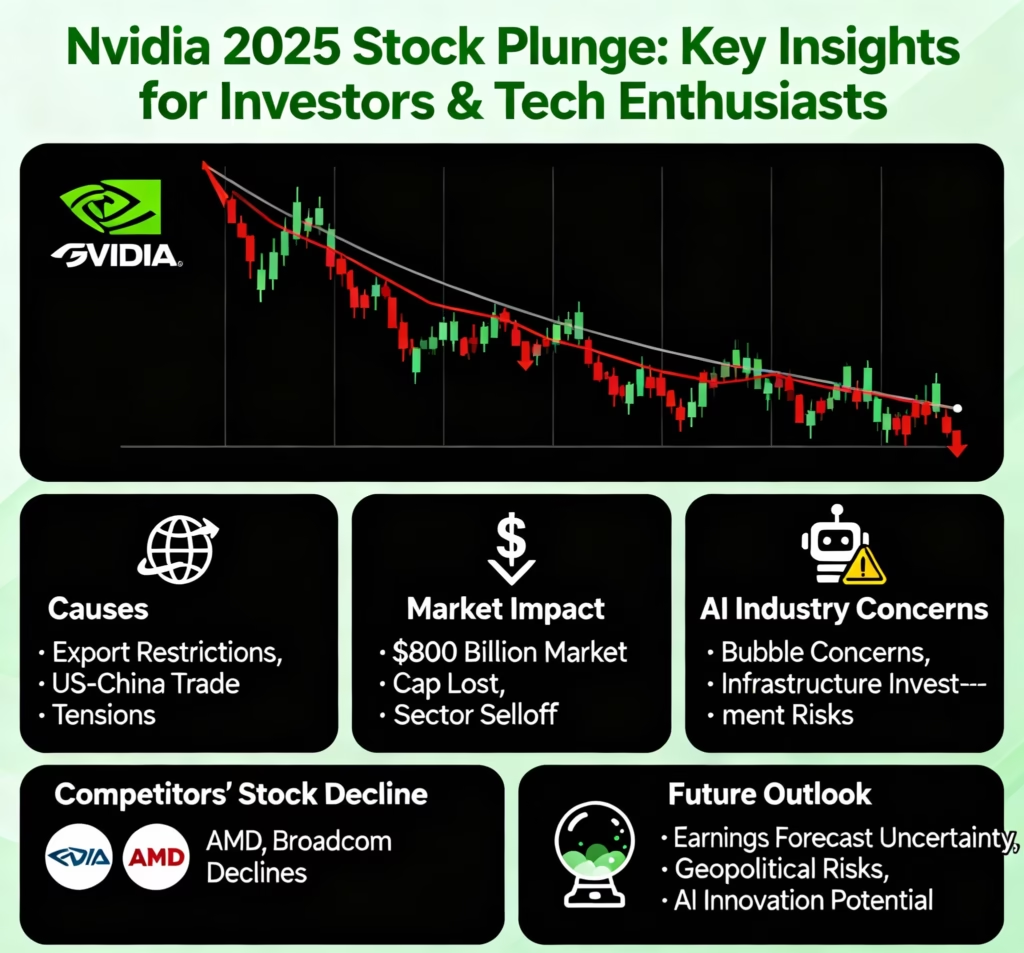
Nvidia Stock Plunge 2025: What Investors and Tech Enthusiasts Must Know
The recent dramatic plunge in Nvidia’s stock price, which erased around $800 billion in market value over just a few sessions, has sent shockwaves through global financial markets, technology sectors, and the semiconductor industry. This blog delves into the multifaceted factors behind Nvidia’s sharp decline, the implications for the AI chip market, and what investors and industry stakeholders should watch next.
What Caused Nvidia’s Stock to Drop Sharply in 2025?
Nvidia, the leading AI chipmaker, faced an unprecedented selloff resulting in more than a 16% drop in its share price over four trading days. This correction followed Nasdaq’s broader volatility but was accelerated by several intersecting challenges. Firstly, the U.S. government, continuing its strict export control policies, imposed a block on shipments of Nvidia’s advanced Blackwell AI chips to China. This restriction severed a vital revenue stream, as China accounts for nearly 20% of Nvidia’s data center sales.
Nvidia CEO Jensen Huang publicly confirmed that the company currently has no plans to ship AI chips to China, emphasizing that the geopolitical and regulatory landscape dictates the company’s limited market access. Huang’s prior comments comparing AI race progress between the U.S. and China added fuel to market apprehensions.
How Do US Export Restrictions Impact Nvidia and China?
The Trump administration’s tightened export curbs form a crucial backdrop to Nvidia’s woes. The prohibition on sending cutting-edge AI chips to China not only hits Nvidia’s immediate revenue but also disrupts the broader supply chain and innovation ecosystem in the semiconductor industry. China, as a massive consumer of AI infrastructure, is now deprived of access to leading U.S.-based technology, affecting Chinese AI development timelines.
For Nvidia, this means a dual challenge: declining sales in a major market and increased unpredictability in future growth projections. The “blacklist” status influences investor sentiment, raising alarms about the long-term ability of American semiconductor giants to tap into lucrative foreign markets. Analysts frequently cite this as a key risk factor amid ongoing U.S.-China technological rivalry.
What Does Nvidia’s Stock Plunge Mean for the AI Industry?
Nvidia’s stock decline surprisingly sparked broader concerns about a possible AI investment bubble. After several years of meteoric gains driven by AI hype and technology breakthroughs, investors are now reevaluating valuations that appeared overly optimistic. The selloff extended to other semiconductor players such as AMD and Broadcom, reflecting worries over whether AI infrastructure spending will sustain its explosive growth trajectory given regulatory hurdles and global economic pressures.
OpenAI’s CFO suggesting a need for potential federal support for AI infrastructure investments added to market uncertainties. However, government officials clarified that no bailout will be forthcoming, indicating that AI development will need to weather market discipline and economic realities rather than rely on public funds.
How Are Other Semiconductor Stocks Affected by the Nvidia Selloff?
Nvidia’s plunge sent ripples across the semiconductor sector. Stocks of companies heavily exposed to AI chipmaking, like AMD and Broadcom, also declined between 3% and 6%, signaling investor jitters about the sustainability of the AI-driven growth surge that buoyed these firms.
Key factors contributing to the sector’s volatility include:
- Regulatory pressures limiting chip sales to China
- Rising concerns about AI market saturation and valuation bubbles
- Broader tech market corrections amid tightening economic policy
Investors are watching corporate earnings, technological innovations, and geopolitical developments closely to gauge which firms can maintain growth momentum in this challenging environment.
What Is the Long-Term Outlook for Nvidia Amid AI Regulation and Market Volatility?
Despite the near-term selloff, most analysts remain cautiously optimistic about Nvidia’s future. The company is expected to report robust data center revenue surpassing $25 billion in its upcoming earnings report, underscoring strong demand for AI computing power in cloud and enterprise segments.
Nvidia’s leadership in AI chip design and its extensive ecosystem of software development tools position it well for sustained innovation. However, the company must navigate increasingly fragmented global markets, evolving export control policies, and competitive pressures from both domestic incumbents and emerging Chinese rivals.
Key long-term factors to monitor include:
- The resolution or escalation of US-China technology tensions
- Advancements in AI chip architectures and alternative computing platforms
- Nvidia’s strategic moves in diversification beyond data center GPUs
Actionable Insights for Investors and Tech Enthusiasts
- Stay informed on regulatory updates impacting chip exports and international trade policies.
- Monitor semiconductor earnings reports and guidance for market sentiment signals.
- Evaluate Nvidia’s advancements in AI chip technology against peers to assess competitive positioning.
- Consider the broader tech macro environment and potential AI bubble risks before making speculative investments.
- Diversify portfolios by assessing opportunities in cloud computing, AI software, and infrastructure beyond semiconductor hardware.
Conclusion
Nvidia’s 2025 stock plunge is a defining moment that reflects the complex interplay of geopolitics, regulatory policy, market dynamics, and technological innovation shaping the semiconductor and AI industries. While immediate challenges are significant, Nvidia’s foundational role in AI chipmaking and cloud infrastructure positions it for recovery and growth pending resolution of export restrictions and global market conditions. Investors and tech followers should adopt a nuanced approach, balancing optimism for the AI revolution with caution around market volatility and regulatory headwinds.
References
- Nvidia Investor Relations: https://investor.nvidia.com
- U.S. Export Controls on AI Chips: https://www.bis.doc.gov/index.php/policy-guidance/export-controls
- Semiconductor Industry Trends 2025: https://www.bloomberg.com/semiconductor-reports-2025
- Reuters Coverage on Nvidia Stock: https://www.reuters.com/companies/NVDA.O
Keywords: Nvidia stock plunge 2025, Nvidia stock drop, Nvidia market value loss, Nvidia AI chip export restrictions, US export controls on Nvidia, impact of export restrictions on China, AI industry market correction, semiconductor stock selloff 2025, broader AI bubble concerns, Nvidia CEO Jensen Huang interview, Nvidia data center revenue 2025, future outlook for Nvidia stock, semiconductor industry trends 2025, Nvidia stock market analysis, Nvidia investor news, AI chip market, US-China tech rivalry, Nvidia earnings forecast, AI infrastructure investments, semiconductor market volatility
Disclaimer: Transparency is important to us! This blog post was generated with the help of an AI writing tool. Our team has carefully reviewed and fact-checked the content to ensure it meets our standards for accuracy and helpfulness. We believe in the power of AI to enhance content creation, but human oversight is essential.